Showing posts with label 31 days. Show all posts

Tuesday, September 30, 2014

31 days of....

Two years ago, I joined in with hundreds of other bloggers in 31 days of blogging. I didn't do it last year, but I am again this year. This year, I am doing 31 Days of Recipes! My husband is very excited. So, join me on my recipe-a-day blog journey!

This post will contain all the links to each recipe I post, so you might want to bookmark it. :)


Monday, October 29, 2012

31 Days of Awareness: Down Syndrome

Down Syndrome

Awareness Color: Blue and Yellow
Awareness Month: October
Source
Down syndrome (DS), also called Trisomy 21, is a condition in which extra genetic material causes delays in the way a child develops, both mentally and physically. It affects about 1 in every 800 babies born in the United States.

Sunday, October 28, 2012

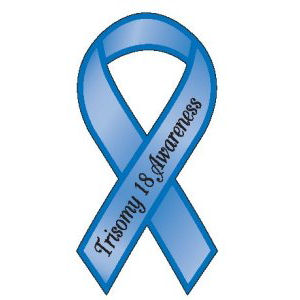
31 Days of Awareness: Trisomy 18

Trisomy 18

Awareness Color: Light Blue
Awareness Month: March
Source
Trisomy 18, also known as Edwards syndrome, is a condition which is caused by a error in cell division, known as meiotic disjunction.  Trisomy 18 occurs in about 1 out of every 2500 pregnancies in the United States, about 1 in 6000 live births.  The numbers of total births increase significantly when stillbirths are factored in that occur in the 2nd and 3rd trimesters of pregnancy. Unlike Down syndrome, which also is caused by a chromosomal defect, the developmental issues caused by Trisomy 18 are associated with medical complications that are more potentially life-threatening in the early months and years of life. 50% of babies who are carried to term will be stillborn, with baby boys having higher stillbirth rate than baby girls.

Saturday, October 27, 2012

31 Days of Awareness: "R" word

Stop the "R" Word

The R-word is the word 'retard(ed)'. Why does it hurt? The R-word hurts because it is exclusive. It’s offensive. It’s derogatory. The R-word is hate speech.

Friday, October 26, 2012

31 Days of Awareness: Cystic Fibrosis

Cystic Fibrosis

Awareness Color: Purple (US), Red (Canada)
Awareness Month: May
Source

Cystic fibrosis (CF) is an inherited disease of the mucus and sweat glands. It affects mostly your lungs, pancreas, liver, intestines, sinuses and sex organs. CF causes your mucus to be thick and sticky. The mucus clogs the lungs, causing breathing problems and making it easy for bacteria to grow. This can lead to problems such as repeated lung infections and lung damage.

Thursday, October 25, 2012

31 Days of Awareness: POTS

Postural Orthostatic Tachycardia Syndrome

Awareness Color: Orange (unofficial)
Source

Postural orthostatic tachycardia syndrome (POTS) is a condition characterized by an inappropriate elevation in heart rate when standing up. People who have POTS experience symptoms - most often lightheadedness and palpitations - whenever they are upright. Their symptoms can vary in severity from quite mild to incapacitating.

In addition to the rapid heart rate, they can also have a drop in their blood pressure when standing. Up to 40% of people with POTS will have at least one episode of syncope (passing out).
POTS is a disorder of young people. Most who have this condition are between 14 and 45 years of age and are otherwise healthy. Women are four to five times more likely to develop POTS than men. A propensity for POTS appears to be present in some families.

Wednesday, October 24, 2012

31 Days of Awareness: Cerebral Palsy

Cerebral Palsy

Awareness Color: Green
Awareness Month: March
Awareness Day: March 20
Source

Cerebral palsy (CP) is a disorder that affects muscle tone, movement, and motor skills (the ability to move in a coordinated and purposeful way). CP is usually caused by brain damage that occurs before or during a child's birth, or during the first 3 to 5 years of a child's life.

Tuesday, October 23, 2012

31 Days of Awareness: Bullying

Bullying

Awareness Color: Officially Blue. Orange and Purple are worn also.
Awareness Month: October
Source
Bullying is the use of force or coercion to abuse or intimidate others. The behavior can be habitual and involve an imbalance of social or physical power. It can include verbal harassment or threat, physical assault or coercion and may be directed repeatedly towards particular victims, perhaps on grounds of racereligiongendersexuality, or ability. The victim of bullying is sometimes referred to as a "target".

Monday, October 22, 2012

31 Days of Awareness: Breast Cancer

Breast Cancer
Source

Awareness Color: Pink
Awareness Month: October
Awareness Day: October 22

Breast cancer is a disease in which malignant (cancer) cells form in the tissues of the breast. Breast cancer develops in the breast tissue, primarily in the milk ducts (ductal carcinoma) or glands (lobular carcinoma). The cancer is still called and treated as breast cancer even if it is first discovered after traveling to other areas of the body. In those cases, the cancer is referred to as metastatic or advanced breast cancer.

Sunday, October 21, 2012

31 Days of Awareness: Heart Disease

Heart Disease
Source

Awareness Color: Red
Awareness Month: February


Cardiovascular disease aka heart disease is a class of diseases that involve the heart or blood vessels (arteries, capillaries and veins). Cardiovascular disease refers to any disease that affects the cardiovascular system, principally cardiac disease, vascular diseases of the brain and kidney, and peripheral arterial disease. The causes of cardiovascular disease are diverse but atherosclerosis and/or hypertension are the most common. Besides, with aging come a number of physiological and morphological changes that alters cardiovascular function and lead to subsequently increased risk of cardiovascular disease, even in health asymptomatic individuals.

Saturday, October 20, 2012

31 Days of Awareness: Post Traumatic Stress Disorder

Post Traumatic Stress Disorder
Source
Awareness Color: Black/Yellow Ribbon with a red star
Awareness Month: June

Post Traumatic Stress Disorder, or PTSD,  is a type of aniexty disorder that is caused by a traumatic event. You can develop post-traumatic stress disorder when you experience or witness an event that causes intense fear, helplessness or horror. It can occur at any time after seeing or being involved in a traumatic event that caused, or threatened to cause, grave physical injury. This means it can show up years after the event. PTSD can improve with time and healthy coping treatments. Every case of PTSD can be different. Each person has different coping methods which results in different treatments.

Friday, October 19, 2012

31 Days of Awareness: Interstitial Cystitis

Interstitial Cystitis
Source

Awareness Color: Teal
Awareness Month: September


Interstitial cystitis, or bladder pain syndrome (commonly abbreviated to "IC/BPS"), is a chronic, often severely debilitating disease of the urinary bladder. Of unknown cause, it is characterized by: pain associated with the bladder, pain associated with urination (dysuria), urinary frequency (as often as every 10 minutes), urgency, and/or pressure in the bladder and/or pelvis.

Thursday, October 18, 2012

31 Days of Awareness: Polycystic Ovary Syndrome

Polycystic Ovary Syndrome

Awareness Color: Teal
Awareness Month: September
Source
Polycystic Ovary Syndrome (PCOS) is a condition in which a woman’s ovaries and in some cases the adrenal glands, produce more androgens (a type of hormone, similar to testosterone) than normal. PCOS is the most common endocrine disorder of women, affecting as many as 1 in 10. While there is no cure for PCOS, the symptoms of PCOS can be managed with proper treatment by a qualified PCOS physican.

Wednesday, October 17, 2012

31 Days of Awareness: Eating Disorders

Eating Disorders
Source

Awareness Color: Periwinkle
Awareness Week: 1st week in February

Eating disorders refer to a group of conditions defined by abnormal eating habits that may involve either insufficient or excessive food intake to the detriment of an individual's physical and mental health. Bulimia nervosaanorexia nervosa, and binge eating disorder are the most common specific forms.

Tuesday, October 16, 2012

31 Days of Awareness: Hirschsprung's Disease

Hirschsprung's Disease
Source

Awareness Color: Maroon/Burgundy
Awareness Day: September 25 (Illinois only)

Hirschsprung disease (HD) is a disease of the large intestine that causes severe constipation or intestinal obstruction. HD occurs when some of the nerve cells that are normally present in the wall of the intestine do not form properly during fetal development. HD affects 1 in 5000 newborns/toddlers, most often boys.

Monday, October 15, 2012

31 Days of Awareness: Infertility

Infertility
Source

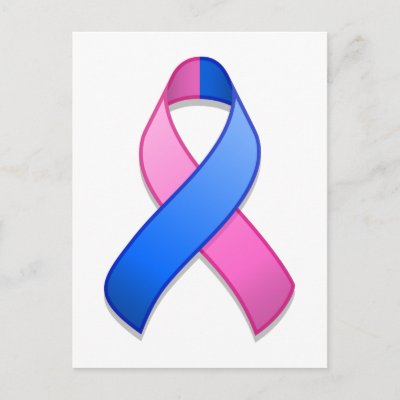
Awareness Color: Blue/Pink gradiant
Awareness Month: April
Awareness Week: Last full week in April

Infertility primarily refers to the biological inability of a person to contribute to conception. Infertility may also refer to the state of a woman who is unable to carry a pregnancy to full termInfertility is grouped into two categories: Primary infertility refers to couples who have not become pregnant after at least 1 year of unprotected sex (intercourse). Secondary infertility refers to couples who have been pregnant at least once, but never again. About 10 percent of women (6.1 million) in the United States ages 15-44 have difficulty getting pregnant or staying pregnant.

Sunday, October 14, 2012

31 Days of Awareness: Diabetes

Diabetes
Source

Awareness Color: Grey
Awareness Month: November


Diabetes mellitus, or simply diabetes, is a group of metabolic diseases in which a person has high blood sugar, either because the body does not produce enough insulin, or because cells do not respond to the insulin that is produced. This high blood sugar produces the classical symptoms of polyuria (frequent urination), polydipsia (increased thirst) and polyphagia (increased hunger).
There are three main types of diabetes mellitus (DM). Type 1 diabetes results from the body's failure to produce insulin, and presently requires the person to inject insulin or wear an insulin pump. This form was previously referred to as "insulin-dependent diabetes mellitus" (IDDM) or "juvenile diabetes".Type 2 diabetes results from insulin resistance, a condition in which cells fail to use insulin properly, sometimes combined with an absolute insulin deficiency. This form was previously referred to as non insulin-dependent diabetes mellitus (NIDDM) or "adult-onset diabetes". The third main form,gestational diabetes occurs when pregnant women without a previous diagnosis of diabetes develop a high blood glucose level.

Saturday, October 13, 2012

31 Days of Awareness: Mental Health

Mental Health Awareness
Awareness Color: Lime Green
Awareness Week: First full week in October
Awareness Month: May

Mental illness is a medical illness that doesn’t discriminate.  In fact, one out of every four Americans will experience a serious mental disorder in his or her lifetime that can intensely disrupt a person’s thinking, feeling, mood, and ability to relate to others. These illnesses encompass everything from anxiety, depression, bi-polar disorder, schizophrenia, and post traumatic stress disorder.

Friday, October 12, 2012

31 Days of Awareness: Ehlers-Danlos Syndrome

Ehlers-Danlos Syndrome

Awareness Color: Distinctive zebra ribbon
Awareness Month: May

Ehlers-Danlos syndrome (EDS) is a heterogeneous group of heritable connective tissue disorders, characterized by articular (joint) hypermobility, skin extensibility and tissue fragility. There are six major types of EDS. The different types of EDS are classified according to their manifestations of signs and symptoms.

Thursday, October 11, 2012

31 Days of Awareness: Visual Impairments

Visual Impairments

Awareness Month : October
Awareness Day: World Sight Day (2nd Thursday in October)


A visual impairment is any visual condition that impacts an individual’s ability to successfully complete the activities of everyday life. Students with visual impairments are infants, toddlers, children and youths who experience impairments of the visual system that impact their ability to learn. The rate at which visual impairments occur in individuals under the age of 18 is 12.2 per 1,000. Severe visual impairments (legally or totally blind) occur at a rate of .06 per 1,000.